Trust, but Verify: AI Hallucinations in Legal Practice
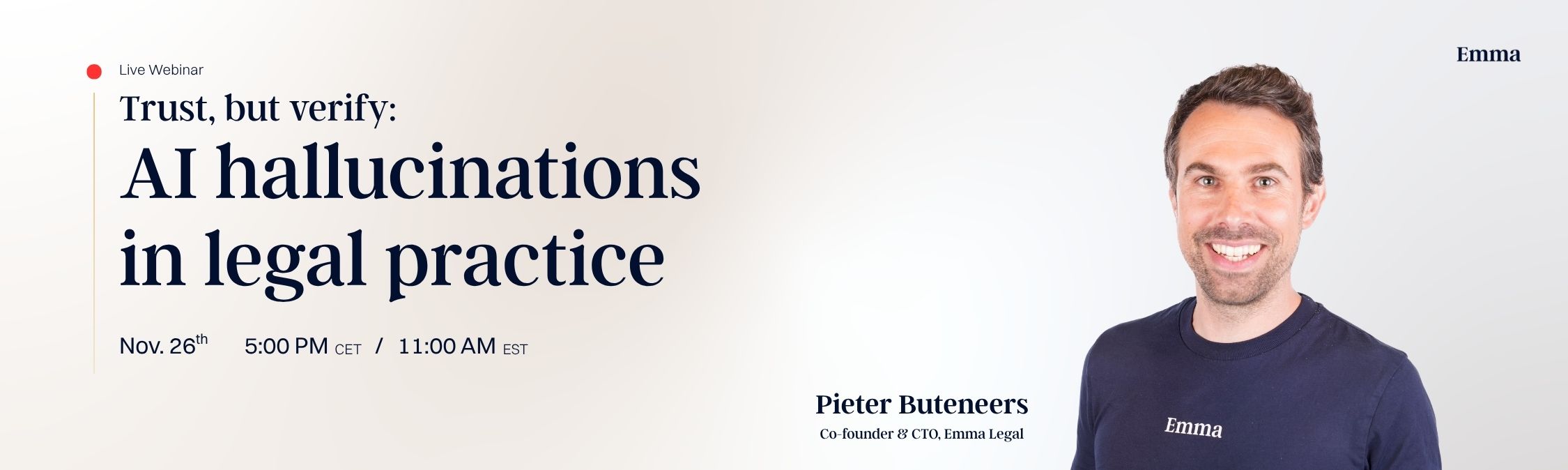
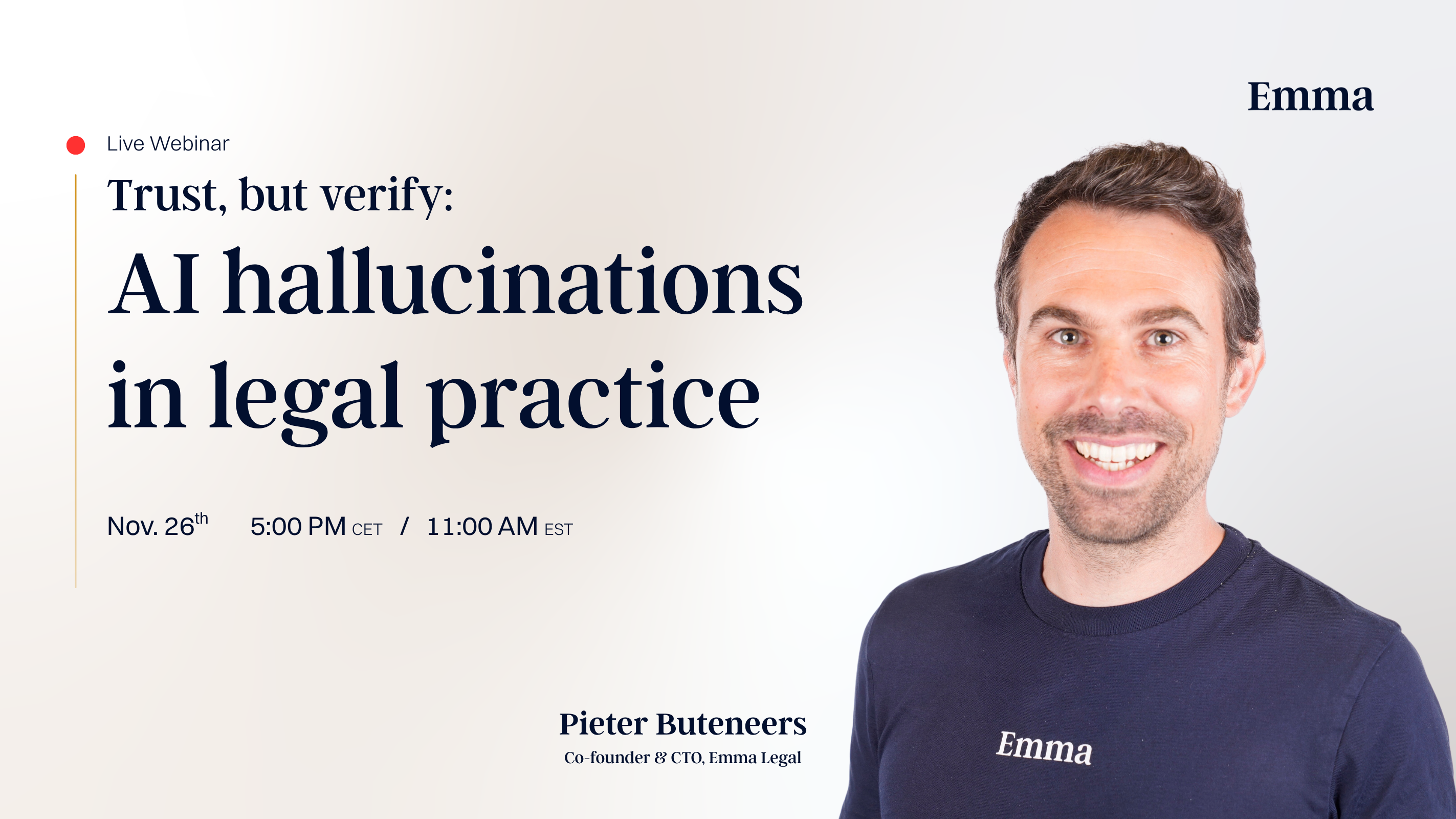
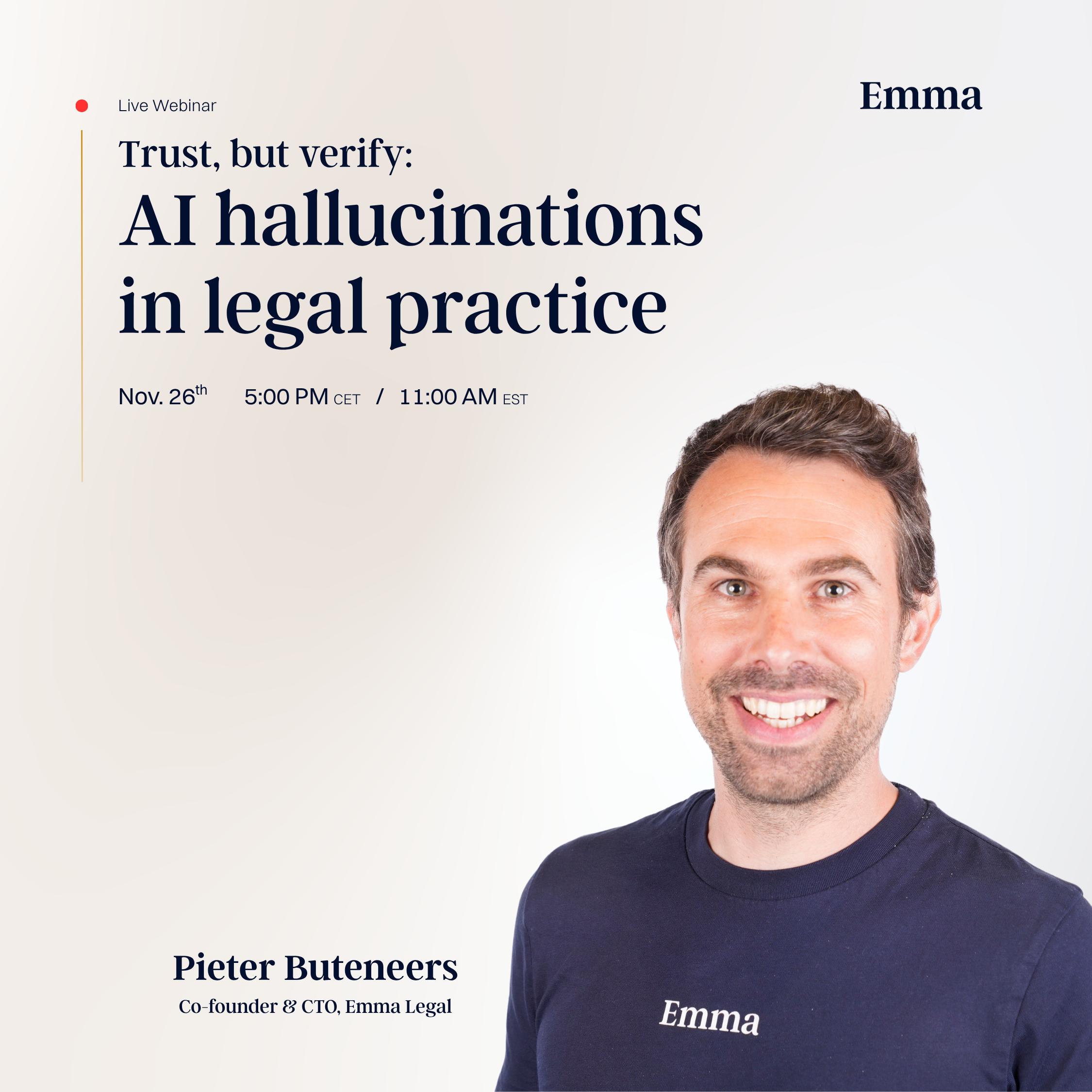
AI-generated legal findings can cite sources and still be wrong. Join Emma Legal on November 26 to learn how to spot hallucinations and verify AI outputs.


A citation is not proof.
Legal AI is getting better at providing answers backed by references. But there's an important distinction between citing a document and correctly interpreting what it says.
An AI system can reference the right clause and still draw the wrong conclusion. It can overlook context across documents, misinterpret contractual language, or present an incomplete analysis with absolute confidence.
For lawyers working on high-stakes matters, that distinction matters. The question is no longer simply whether AI can find an answer, but whether that answer is reliable enough to inform legal judgment.
In this session, we'll look beyond the promises of AI accuracy and explore what legal professionals actually need to verify.
What we'll cover
- Why AI hallucinates, even with sources attached: Understand why AI sometimes invents information, misinterprets evidence, or reaches conclusions its citations don't support. And why adding references doesn't automatically solve the problem.
- Where document-grounded AI still gets it wrong: Connecting AI to your own documents reduces certain risks, but doesn't eliminate them. We'll explore where retrieval, context, conflicting provisions and complex legal reasoning can still lead to unreliable findings.
- How to verify AI findings and challenge your vendor: Learn what to check before relying on AI-generated analysis, how to distinguish a supported finding from a plausible assumption, and which questions to ask vendors about accuracy, traceability and quality assurance.
What you'll walk away with
A clearer understanding of where legal AI can fail, a practical approach to validating its findings, and better questions to ask when evaluating AI tools.
The objective isn't to discourage AI adoption. It's to help legal professionals use these systems with the scrutiny their work demands.
Who should attend?
Corporate and M&A lawyers, in-house legal teams, legal innovation leaders, knowledge professionals and anyone responsible for evaluating or using AI-generated legal analysis.
No deep technical background required. Just a willingness to look beyond the confidence of an AI-generated answer and examine the evidence behind it.