
In this episode of Legal Tech StartUp Focus, Rick van Esch, CEO of Emma Legal, explains how modern due diligence technology makes critical risks visible when it matters most. By structuring uploads against diligence request lists, automatically flagging material clauses, and enabling secure collaboration, Emma turns due diligence into a strategic advantage, surfacing gaps early, strengthening decision-making, and supporting value creation from signing through post-close.
Transforming M&A Due Diligence: Structure, Visibility, and Strategic Value
The friction in M&A transactions rarely stems from lack of effort. Deals stall, timelines extend, and value erodes because the right stakeholders cannot identify material risks at the moment decisions need to be made. This fundamental challenge, visibility and timing, sits at the heart of modern due diligence practice.
Rick van Esch, CEO and co-founder of Emma Legal, joined the Legal Tech StartUp Focus Podcast to discuss how technology can address this structural problem. His perspective, shaped by experience in capital markets and enterprise AI before building Emma Legal, offers practical insights into how firms are rethinking due diligence workflows.
The Core Problem: Unstructured Data Meets Complex Questions
Traditional due diligence follows a familiar pattern: hundreds or thousands of documents uploaded to a data room, often with inconsistent naming conventions and folder structures. Legal teams receive diligence request lists and begin the manual process of locating, reviewing, and analyzing relevant documents. The challenge isn't the volume alone, it's the disconnect between how documents are stored and how legal questions are structured.
Emma Legal approaches this by connecting directly to leading data room providers and mapping uploaded documents against standard due diligence request lists. This structure reveals gaps immediately rather than weeks into the process. When a request list asks for material customer contracts and only three of fifteen expected documents appear, that visibility allows teams to address the issue before it becomes a closing condition problem.
Red Flag Detection: Moving Beyond Keyword Search
The conversation explored Emma's approach to automated clause identification. Rather than relying on simple keyword matching, the platform's red flag engine identifies specific provisions that carry diligence weight: change of control clauses, automatic renewal terms, reserve matters in shareholders' agreements, drag-along and tag-along rights, consent requirements, and termination triggers.
This capability matters because materiality in contract review is contextual. A standard termination-for-convenience clause in one agreement may be routine; the same language in a contract representing 40% of recurring revenue requires different treatment. Color-coded highlighting and triage capabilities allow senior lawyers to direct associate attention to provisions that warrant deeper analysis, rather than treating all flagged items equally.
The output format also differs from traditional diligence reports. While static PDF summaries remain available, Emma enables interactive dashboards that combine AI-identified provisions with attorney commentary. This approach allows clients and counterparties to engage with diligence findings directly, understanding not just what was found but why it matters, without exposing attorney work product or privileged analysis.
Vendor Due Diligence: Preparing the Asset
The discussion highlighted an often-overlooked application: vendor due diligence on the sell side. Rather than reacting to buyer requests after an LOI is signed, preparing the "asset" before going to market accelerates timelines and builds buyer confidence. Rick used a car sensor analogy, maintaining constant visibility into contracts and corporate housekeeping allows sellers to share that clarity with buyers immediately, reducing the friction that extends processes and creates negotiating leverage for buyers.
This preparation extends beyond speed. When sellers can proactively address contract gaps, missing consents, or housekeeping issues before marketing begins, they eliminate discovery risks that might otherwise reduce valuation or create closing conditions. The same structured data that supports buy-side diligence becomes a strategic tool for sell-side preparation.
Post-Close Integration: Where Deal Value Is Realized
Due diligence doesn't end at closing. The insights developed during diligence: renewal calendars, consent requirements, notice obligations, and change of control provisions, directly impact post-acquisition integration and value realization. Rick emphasized that this is where real deal value is made or lost.
A platform that serves as a single source of truth for contractual obligations enables operational teams to manage renewals, obtain necessary consents, and honor notice requirements without recreating analysis that already occurred during diligence. This continuity prevents the common scenario where diligence findings disappear into archived reports, only to be rediscovered months later when a renewal auto-executes or a consent wasn't obtained.
Network Effects and Permissioned Collaboration
The conversation explored how permissioned access creates network effects. When PE counsel, bankers, and other advisors can access specific views of diligence data relevant to their roles without compromising security or exposing privileged material—collaboration friction decreases. Each participant sees what they need when they need it, rather than requesting updates through email chains that create version control problems and information lag.
This approach requires careful thought about access controls and work product protection. The technical capability to share must be paired with deliberate decisions about what to share, with whom, and in what format. When implemented thoughtfully, permissioned collaboration reduces the coordination overhead that consumes senior lawyer time in complex transactions.
Building for the Legal Market: Founder Insights
Rick shared candid observations about building legal technology companies. Legal sales cycles demand perseverance, deals that seem close may take quarters to close, and timelines slip for reasons outside any vendor's control. Credibility matters enormously; law firms and corporate legal departments need confidence that technology partners will be available for support months and years after implementation.
Fundraising, he noted, can serve as a strategic signal when selling to enterprise buyers. It demonstrates staying power and commitment to continued development. Product-market-founder fit—the alignment between what you're building, who needs it, and why you're uniquely positioned to build it, sustains founders through extended sales cycles.
The technical requirements for legal AI differ from consumer applications. Accuracy, explainability, and the ability to show how conclusions were reached matter more than speed alone. Legal professionals need to understand and verify AI outputs, which means transparency in methodology and clear citation to source documents.
Key Considerations for Structured Due Diligence
For firms adopting structured due diligence methodologies, four practical considerations merit attention:
1. Document Access and Flow: Identify where the seller's documents are stored at the outset. Effective structure requires seamless document flow from source to analysis. Minimizing friction in this process is paramount.
2. Standardization with Flexibility: Established platforms such as Emma Legal offer ready-made playbooks that provide a valuable starting point. Working from predetermined checklists and standardized checks enhances consistency and efficiency. However, given that no two transactions are identical, flexibility remains essential—different transaction types, industries, and buyer requirements necessitate tailored approaches to document requests and analysis.
3. Clear Governance and Collaboration: A well-defined governance framework is critical for effective teamwork. A collaborative workspace with clear assignment protocols, review processes, decision-making authority, and communication channels enables focused, efficient work.
4. Tailored Reporting: Insights must be translated into appropriately formatted deliverables aligned with your firm's branding. The system should accommodate diverse reporting requirements across colleagues, industries, and due diligence types. Board presentations demand different formatting than detailed memoranda to client counsel; interactive dashboards serve distinct purposes from printed reports. This translation from insight to advice is where value is truly created.
The Path Forward
The conversation concluded with thoughts on where due diligence technology is headed. As AI capabilities improve, the gap between document review and strategic analysis narrows. The question isn't whether technology can identify clauses—it's whether it can help lawyers understand implications, compare alternatives, and advise on risk allocation.
The firms that extract the most value from due diligence technology won't be those that simply automate existing processes. They'll be firms that use structure and visibility to ask better questions earlier, involve the right people at the right moments, and carry insights from diligence through to post-close value realization.
For senior lawyers evaluating due diligence technology, the framework Rick outlined offers a useful lens: Does this tool reveal gaps early? Does it surface material risks reliably? Does it enable collaboration without compromising security? And does it create a record that has value beyond the closing date?
These questions focus attention on strategic value rather than feature lists—a distinction that matters when the real cost of poor due diligence isn't the hours spent reviewing documents, but the material issues discovered too late to address effectively.
Follow Legal Tech StartUp Focus for daily legal tech news.
Other related podcasts

Why Most Law Firm Transformations Fail. And What Real Modernization Actually Requires
Legal AI adoption in M&A law firms often fails due to weak strategy, culture, and change management, not technology revealing deeper structural issues in legal due diligence workflows.
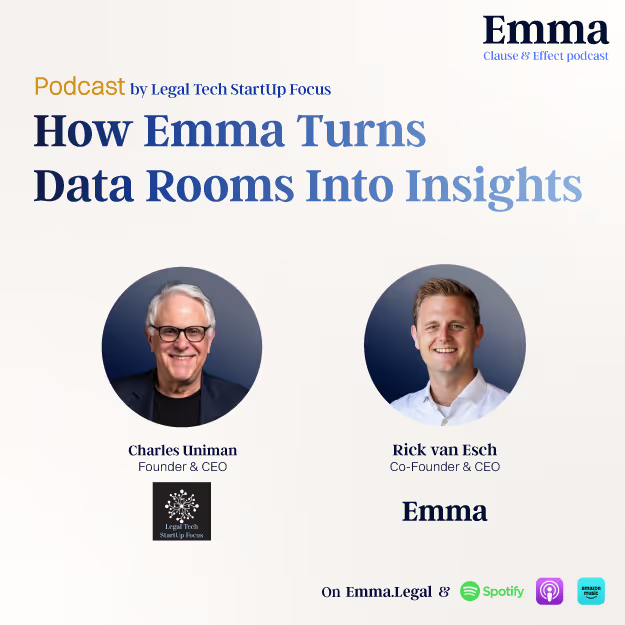
How Emma Legal Turns Data Rooms Into Insight
Rick van Esch explains how AI-driven playbooks and structured data rooms transform M&A due diligence from bottleneck to strategic advantage.
The Devil is the Detail: R&W as Risk Allocation Tools in M&A
A senior, practice-driven analysis of how representations, warranties, and indemnities actually allocate risk in cross-border M&A and why due diligence only matters when it changes the drafting.